
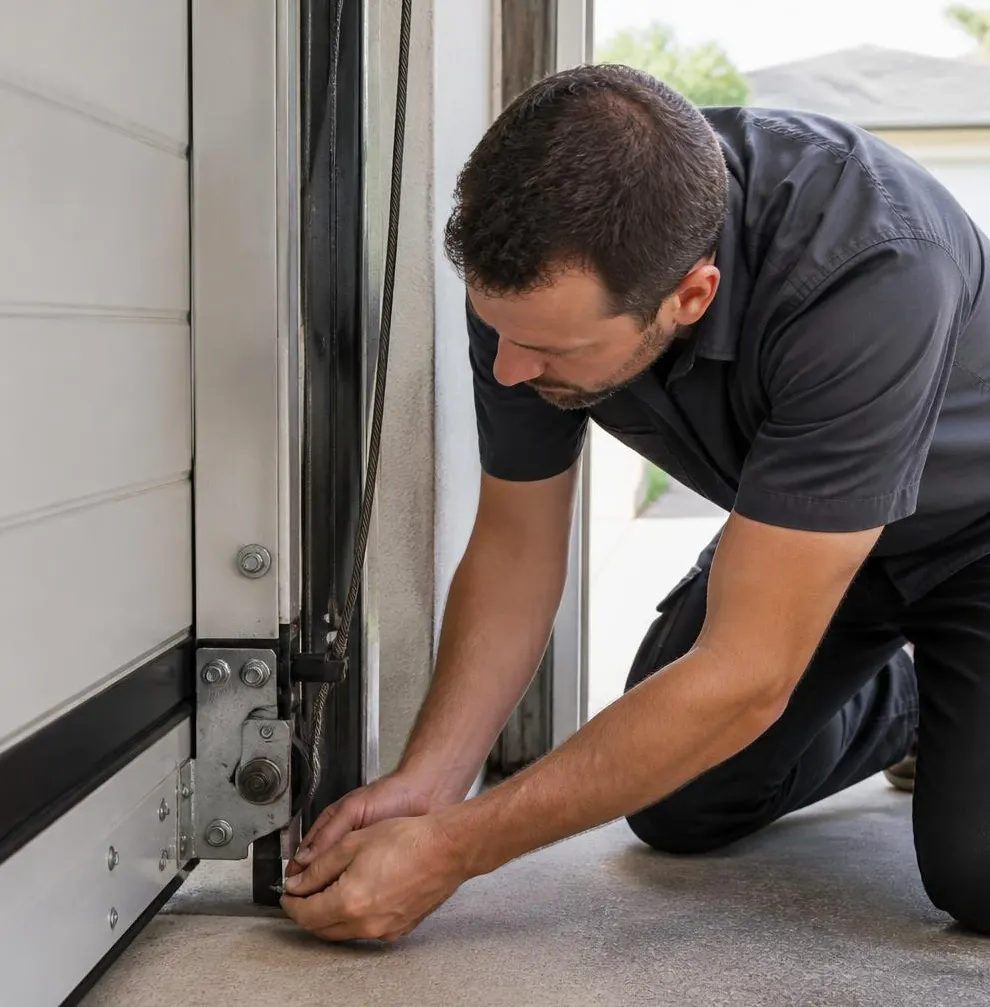
The Mistake Almost Every Family Makes
It usually starts innocently: a toddler gets a kick out of pressing the garage door button and watching the big door rumble down, or the dog is let out to the driveway while the door closes behind everyone "because it'll just stop if it hits something." It's tempting because the button is right there at kid-height by the mudroom door, and modern openers really do have safety features built in. The problem is that those features only work if they're actually functioning, and a lot of households have never tested them, not even once.
What Actually Goes Wrong
Entrapment and Crushing
A standard residential garage door weighs somewhere in the range of 150 to 400+ pounds, depending on size and material. It is not like a car door that gently bounces off an obstruction. If the auto-reverse safety feature is misaligned or worn out, a closing door can come down fully on a child, a pet, a bike, or an adult bent over tying a shoe. This is the single most serious failure mode, and it is also the easiest to prevent, which makes it the one families should never skip checking.
Pinch Points
Sectional garage doors have hinges and rollers between each panel. As the door moves, those seams close like a pair of scissors. Curious toddlers and pets love to put fingers or paws right at that line, especially when the door is opening or closing slowly. Fingertip injuries here are common and can be serious.
Sensor Failures
The photo-eye sensors mounted near the floor on either side of the track are what tell the door to stop and reverse if something breaks the beam. They are mounted low specifically because that's where a toddler or a dog actually is, not where an adult's waist is. If they're bumped out of alignment, covered in grime, or simply unplugged by a stray vacuum cord, the door will close on anything in its path without stopping.
How Bad It Can Get
Crushing injuries from a falling garage door can mean broken bones, head trauma, or worse, particularly for small children and pets who don't have the strength to escape quickly. Pinch point injuries are usually less severe but still mean a trip to urgent care for a crushed or lacerated finger. Spring-related injuries, while less common around children directly, come from the extreme tension stored in torsion or extension springs. A spring that lets go while someone is standing nearby, perhaps a kid watching a parent try to fix a noisy door, can cause serious impact injuries. None of these are hypothetical; they're the predictable result of a door that hasn't been checked in years.
Specific Actions That Actually Prevent These Injuries
- Test auto-reverse monthly. Place a roll of paper towels or a 2x4 flat on the floor where the door closes. The door should touch it and immediately reverse. If it doesn't, stop using the opener until it's repaired.
- Check the photo-eye sensors. Wipe the lenses clean, confirm the small indicator lights are steady (not blinking, which usually means misalignment), and make sure nothing, including a parked bike, a toy bin, or a dog bed, is blocking the beam.
- Move the wall button out of toddler reach, or use a model with a cover, and keep remotes off the coffee table where little hands can grab them.
- Set a keypad code that visitors and curious kids can't guess, and change it if you ever suspect it's been shared more widely than intended.
- Keep hands, leashes, and paws away from the track and the panel seams whenever the door is moving. Treat it like a moving vehicle, not a toy.
- Never let anyone, kids especially, stand or play under a door that's opening or closing, even with auto-reverse working. It's a backup system, not a reason to test it on purpose.
- Leave spring adjustments and repairs to a professional. The tension involved is not something to troubleshoot with a wrench while family is nearby.
What Muskegon's Weather Adds to the Picture
Deep winter cold causes metal springs and tracks to contract, which increases wear and the odds of a spring snapping, often without warning, right when the door is being used the most. Road salt spray and slush tracked in from the driveway also build up grime on photo-eye lenses faster than people expect, which is a quiet way for the safety sensor to go blind without anyone noticing. During spring thaw, mud and debris can work into the tracks and rollers, making the door move unevenly or stick, which throws off sensor alignment even further. A quick monthly check matters more here than in milder climates, simply because the hardware is working harder.
When to Call Muskegon Garage Door Pro
If the auto-reverse test fails, if the sensors won't stay aligned no matter how many times you clean them, or if a spring looks stretched, rusted, or visibly gapped, that's the point to stop troubleshooting and call us. We handle Spring Replacement safely with the right tools and tension equipment, and we offer Preventive Maintenance visits that check sensor alignment, auto-reverse function, hardware wear, and winter readiness all at once, so these risks get caught before they turn into an emergency room visit.
If your household has young kids or pets and it's been a while since anyone tested the safety features on your garage door, give Muskegon Garage Door Pro a call. We serve Muskegon, Norton Shores, North Muskegon, Muskegon Heights, Whitehall, Montague, Fruitport, and Twin Lake, and we'll get your door checked, adjusted, or repaired so your family can use it without worry.